
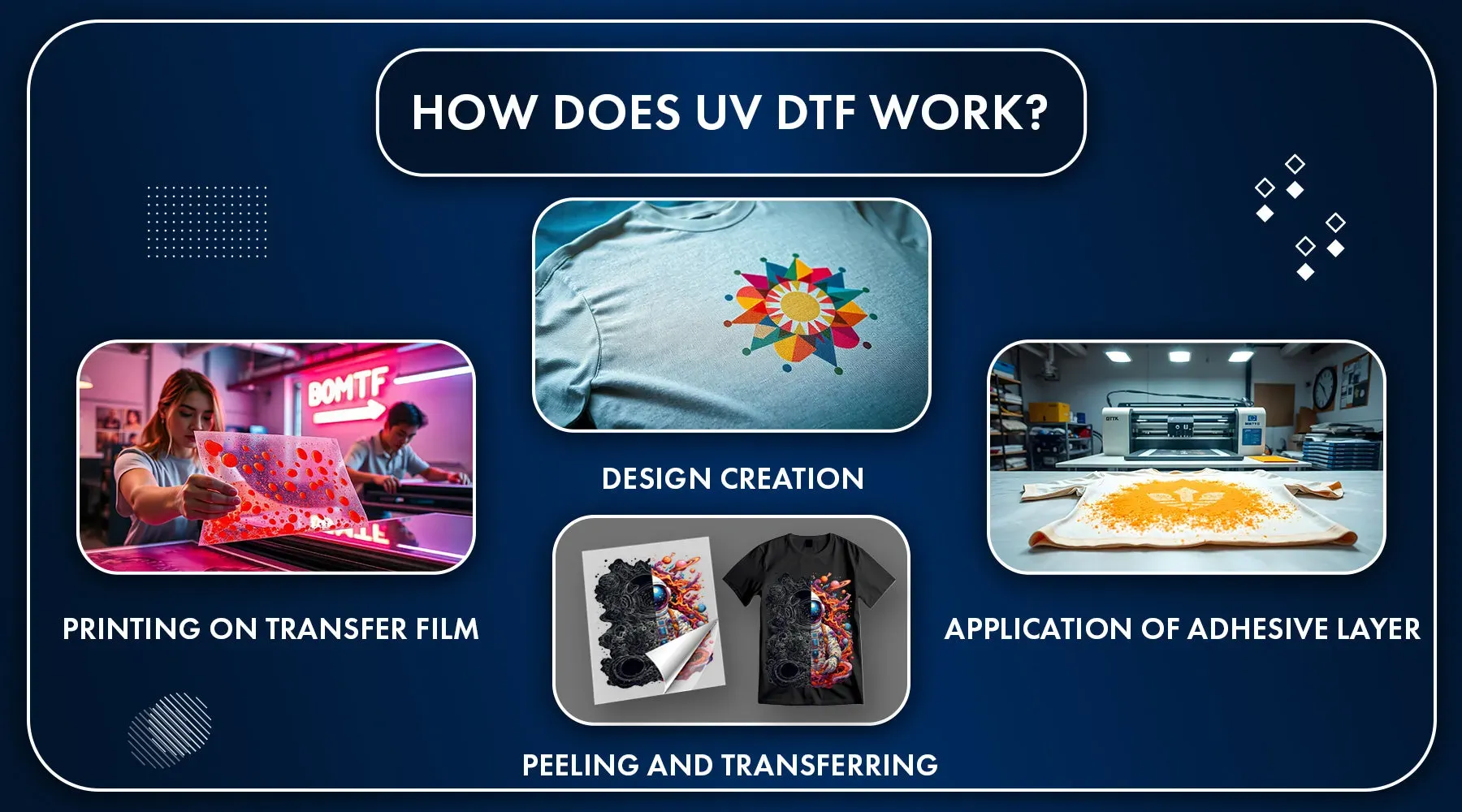
UV DTF transfers are redefining how brands decorate textiles, offering vibrant color, exceptional durability, and on-demand flexibility from the moment a design is printed, enabling quick turns from concept to consumer-ready apparel. This introductory phase blends the precision of digital artwork with fast-curing inks, enabling high-resolution imagery on a broad range of fabrics, from cotton blends to performance synthetics, while supporting small runs and customization without the cost of traditional methods. As the textile printing landscape evolves, textile printing trends place UV DTF printing as a leading option alongside DTF transfers and other innovations that push color fidelity, durability, and a soft hand feel across a broader range of substrates. For designers and manufacturers, the technology promises shorter lead times, simplified workflows, and more sustainable use of materials through on-demand production, while cautioning on substrate compatibility and color management to ensure consistent results when UV printing on fabric. By staying informed about innovations in textile printing and exploring on-demand strategies, brands can maximize impact across product lines, from limited runs to scalable collections, without sacrificing quality or performance.
1. Understanding UV DTF Transfers: Technology and Capabilities
UV DTF transfers combine digital design with rapid UV-curing inks printed on a transfer film, then heat-pressed onto fabric. This process yields high-resolution imagery, sharp details, and smooth gradients that are well-suited for complex artwork and branding elements. The integration of white underbase where needed enhances color vibrancy on dark fabrics, while the durable, fast-curing inks help shorten production cycles and expand on-demand capabilities.
In practice, this technology sits at the intersection of UV DTF printing, DTF transfers, and textile printing trends. It leverages UV-curable inks for quick development and robust results on a wide range of substrates, from cotton-rich blends to certain synthetics. As such, UV DTF transfers are rightly described as a practical evolution in innovations in textile printing, offering precise color control and reproducibility across batch sizes.
2. UV DTF Transfers in Modern Textile Manufacturing: Market Drivers and Demand
The market today prizes on-demand capabilities, customization, and faster time-to-market. UV DTF transfers meet these needs by enabling short runs, personalized designs, and seamless integration with online storefronts and asset management systems. Brands can experiment with limited editions or regional designs without the risk of large minimums, aligning with current textile printing trends toward flexibility and responsiveness.
Beyond speed, durability and wash performance play pivotal roles. The use of protective topcoats and optimized adhesion formulations ensures that designs withstand repeated washing while maintaining color fidelity. Consumers are increasingly mindful of sustainability, so the efficiency of digital workflows and the potential for reduced waste further position UV DTF transfers as a practical option in modern apparel production.
3. Ink and Film Innovations Fueling UV DTF Printing
Central to UV DTF performance are the ink chemistry and film substrates. Improved UV inks offer higher pigment loading, richer color, and better batch-to-batch consistency, which simplifies color management and reduces time spent on calibration. These advancements support the goal of achieving accurate brand-driven visuals across diverse product lines.
Transfer films are evolving as well, with enhanced dye-sub compatibility, stronger adhesion, and easier release during heat pressing. White underbase layers are becoming more reliable for bright tonality on dark fabrics, and precision curing systems—including LED UV emitters—help optimize cycle times without compromising durability. Together, these innovations in textile printing enable deeper textures, sharper edges, and more reliable hand-feel across substrates.
4. Materials and Substrates: Choosing the Right Canvas for UV DTF Projects
Fabric selection remains critical for UV DTF outcomes. Cotton-rich blends typically deliver strong adhesion and vibrant color, while polyester and poly-blends can also perform well with optimized pretreatment and adhesive formulations. Understanding fabric weight, weave, and stretch helps tailor heat press profiles to prevent scorching and ensure complete transfer.
Pretreatment and post-processing routines influence long-term performance. Light pretreatments can improve ink adhesion and wash durability, while post-press curing and careful washing guidance help preserve image quality. Adhesive chemistry between the transfer film and fabric is a key determinant of durability and wash-fastness, driving ongoing research into formulations that minimize edge migration and edge scallops on textured textiles.
5. Quality, Durability, and Care: Ensuring Longevity of UV DTF Prints
Durability is a core expectation for UV DTF transfers. Inks must resist cracking, fading, and color shifts after multiple wash cycles, supported by high-quality pigments and precise cure conditions. A robust adhesive layer ensures a strong bond between the film and fabric, preventing peeling at seams and edges during wear.
Care strategies and topcoat selection play a decisive role in longevity. Finishes that balance abrasion resistance with a soft hand help maintain the garment feel while protecting the print. Quality assurance protocols—such as color management checks, adhesion tests, and wash-fastness evaluations—are essential for delivering consistent results across different fabrics and order volumes.
6. The Road Ahead: Trends, ROI, and Sustainability in UV DTF and Textile Printing
Looking forward, textile printing trends point toward deeper integration of e-commerce, on-demand manufacturing, and hybrid workflows that combine UV DTF with other digital methods. Innovations in textile printing aim to improve color science, soft hand feel, and image realism, while smart textiles integration could unlock simple sensor-based or reactive ink applications within UV DTF workflows.
From a business perspective, the ROI of UV DTF transfers hinges on alignment between design teams, color management, and production operations. Energy-efficient curing, waste reduction through digital workflows, and regional print hubs can shorten supply chains and reduce emissions. As brands seek customization at scale, these trends reinforce the value proposition of UV DTF transfers in delivering high-fidelity designs on a broad fabric spectrum.
Frequently Asked Questions
What are UV DTF transfers and how do they work in UV printing on fabric?
UV DTF transfers are a digital textile transfer process that uses ultraviolet-curing inks printed onto a transfer film, which is then heat-pressed onto fabric. This method combines digital design flexibility with a durable, high-fidelity finish and typically includes a white underbase for dark fabrics. Compared with traditional screen printing or solvent-based DTG, UV DTF transfers offer shorter lead times and easy on-demand customization.
Which fabrics are best suited for UV DTF transfers and what substrate considerations matter in textile printing trends?
UV DTF transfers work well on cotton-rich blends and can also suit polyesters and certain synthetics with optimized pretreatment and adhesive formulations. Key substrate factors include fabric weight and weave, pretreatment needs, and ensuring a strong adhesive bond to prevent edge lift. Understanding these substrate considerations is essential to align with current textile printing trends.
How are innovations in textile printing influencing the quality and durability of UV DTF transfers?
Innovations in UV DTF transfers—such as higher pigment loading UV inks, improved white underbase performance, advanced transfer films, and precision curing systems—enhance color accuracy, detail, and wash durability. Multi-layer transfer concepts can add depth and texture, while better adhesion and cure efficiency reduce color fading and cracking over time.
What are the benefits of UV DTF transfers for small runs and on-demand production?
For small runs and on-demand strategies, UV DTF transfers offer low minimums, fast production cycles, and the ability to customize designs without expensive setup costs. The digital workflow aligns with e-commerce and variable data printing, enabling rapid restocks and localized on-demand fulfillment with less waste.
Why are white underbase and color management critical in UV DTF printing on fabric?
A strong white underbase is essential for vibrant color on dark fabrics, ensuring legibility and color pop. Coupled with robust color management, it reduces time spent on color matching across batches and fabrics, helping UV DTF transfers achieve consistent, high-quality results on diverse materials.
What should brands consider when selecting UV DTF transfer technology or partners within the context of textile printing trends?
Brand decisions should weigh equipment and curing system choices, transfer media quality, and adhesive formulations, as well as how smoothly the workflow integrates with design automation and digital asset management. Evaluating maintenance needs, total cost of ownership, and alignment with current textile printing trends will help maximize ROI for UV DTF transfers.
| Aspect | Key Points |
|---|---|
| What are UV DTF transfers? | Digital textile transfer using UV-curing inks printed on transfer film and heat-pressed to fabric; offers precise color, sharp details, and durable finishes with faster lead times and easy customization compared to traditional methods. |
| Current landscape & market drivers | On-demand production and e-commerce fuel demand for unique designs, quick turnarounds, and sustainable options. Benefits include high-resolution imagery, broad fabric compatibility, rapid curing, and streamlined workflows for on-demand manufacturing. |
| Technologies driving UV DTF printing | Ink chemistry with higher pigment loading and color consistency; improved white underbase; transfer films with better adhesion and dye-sub compatibility; precision curing systems; multi-layer transfer concepts for depth and hand feel. |
| Materials & substrates | Fabric options include cotton-rich blends, polyesters, and certain synthetics. Consider fabric weight, weave, pretreatment, post-processing, and adhesive chemistry for durability and color vibrancy. |
| Quality, durability & wash-fastness | Ink resilience, strong adhesive bonds, substrate compatibility, and protective topcoats influence longevity, color stability, and wash durability. |
| Sustainability considerations | LED-based UV curing reduces energy per print; low-VOC water-based inks; waste reduction through on-demand production and reusable transfer films; mindful end-of-life and durability considerations. |
| ROI & business implications | Digital variability enables personalization; faster time-to-market; lower minimums; capital investments in UV printers and curing systems; requires aligned design, color management, and production workflows. |
| Future trends & opportunities | E-commerce integration, advances in color science and soft hand feel, hybrid workflows with other printing methods, smart textiles compatibility, and regional print hubs for faster, lower-emission production. |
| Implications for designers & brands | High-resolution imagery across a broad fabric range enables detailed artwork and branding; supports limited runs, rapid restocks, and customization—collaborate with partners to optimize color accuracy and durability. |
| Challenges | Color matching across fabrics; edge quality on textured materials; determining the economic sweet spot for small vs. bulk runs; ongoing equipment maintenance and calibration. |
Summary
UV DTF transfers enable high-fidelity textile prints by combining digital design with rapid UV curing, delivering sharp details on a wide fabric range. The current market favors on-demand, customizable production enabled by on-trend workflows and scalable efficiency. Ongoing advances in inks, films, and curing systems broaden color options, durability, and hand feel while supporting sustainable, low-waste processes. Designers and brands can leverage UV DTF transfers for limited runs, quick restocks, and personalized collections, provided they align color management, fabric compatibility, and production capacity to maximize impact.